
Babywearing Workout Safety: What Every Mom Needs to Know
FIT4MOM x Christina Maril
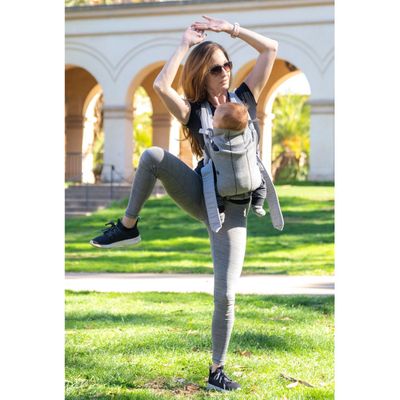
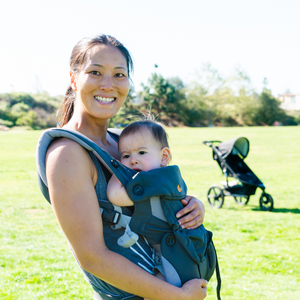
At FIT4MOM, we support all the moms — and that includes those who love to keep Baby close while they move. Babywearing workouts can be a beautiful way to bond with your little one, boost your mood, and strengthen your body.
Just as we’re intentional about stroller safety, class equipment, and postpartum recovery, we also prioritize safety and education when it comes to working out while wearing your baby.
Here’s what every mom should know.
Choose the Right Carrier
Not every baby carrier is built for fitness. When exercising, look for a soft-structured carrier that provides firm, non-stretchy support for both mom and Baby.
A great workout carrier should:
- Support Baby’s spine and hips in a natural “M” position.
- Keep Baby’s airway open (chin off chest).
- Offer head and neck support for infants under 6 months.
- Allow mom to tighten securely at multiple points for proper fit and posture.
- Stay snug and stable — no bouncing or slipping.
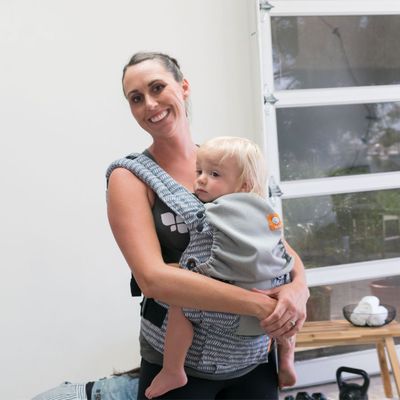
The Safest Carrying Positions for Workouts
In reference to a soft-structured carrier, there are two positions we recommend for exercising:
- Front carry with Baby facing in (Baby’s chest to mom’s chest)
- Back carry with Baby facing mom
For babies under 6 months:
- Always use a front carry, facing in.
- Legs should rest comfortably in an ergonomic “M” shape, knees higher than hips.
- Head and neck should be supported with a headrest or hood.
- Wear Baby high and snug on your body so you can easily kiss the top of their head.
- Keep Baby’s airway open at all times.
- Take breaks as you or Baby warm up — young babies can overheat easily.
We want to support Baby’s natural development, allowing for safe alignment of the spine and hips while mama moves. Some positions that work well for daily use or sightseeing may not be ideal for a fitness setting.
Posture Matters — For Both of You
When Baby is close, your center of gravity shifts — so posture is everything.
Throughout your workout, cue yourself to:
- Keep your chest lifted and shoulders relaxed.
- Engage your core gently, avoiding excessive arching or rounding of your back.
- Keep your hips neutral (not tucked or tilted).
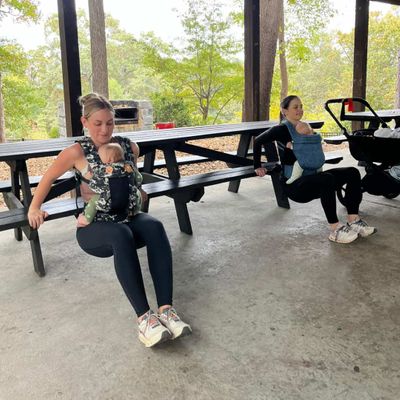
Know Which Movements to Avoid
Rule of thumb: Never position Baby between your body and the ground.
That means skipping exercises like:
- Planks or push-ups (front carry)
- Crunches or sit-ups (back carry)
These positions can place too much pressure on your postpartum core and may strain Baby’s neck or spine. Instead, choose standing or kneeling core activations, squats, and glute work.
Use Resistance Bands Wisely
Resistance bands are great tools — but use caution. Always position Baby so that if a band were to slip or break, Baby is protected.
- Avoid front-anchored band moves (like rows or rear flys) with a front carry.
- Avoid rear-anchored band moves (like chest presses) with a back carry.
If needed, switch to bodyweight versions for a safer, equally effective workout.
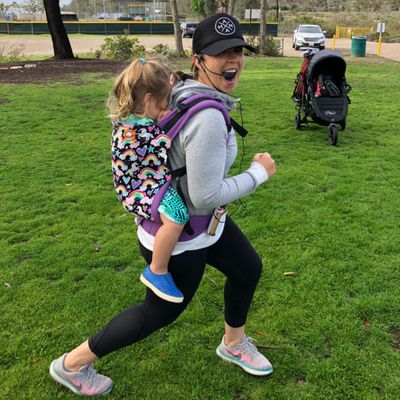
Keep It Low Impact — but High Energy
Skip the jumping or running. High-impact moves can jostle your baby and create stress for both of your bodies. Stick with low-impact options like squats, side steps, and standing cardio moves.
Remember: Low impact doesn’t mean low intensity! You’ll still get your heart rate up and your muscles fired.
Check Baby’s Comfort Often
During your workout, take moments to:
- Re-check Baby’s position and support
- Make sure Baby’s airway stays clear
- Watch for signs of overheating
- Keep Baby close enough to kiss
If Baby needs a break, take one. Hydrate, rest, and reset together.
Why We Skip Front-Facing Carries for Exercise
Front-facing positions are great for sightseeing, but not for workouts. Facing out can cause an unnatural curve in Baby’s spine and extra hip pressure, especially with narrow-seated carriers. During exercise, always have the baby facing in toward you for the safest and most supportive setup.
At FIT4MOM, safety and strength go hand in hand. Whether you’re leading a class or joining one, remember: the goal of babywearing workouts isn’t to push harder. It’s to move smarter.
Keep Baby close, listen to your body, and celebrate the powerful connection between fitness and motherhood.
KEEP MOVING WITH US!
Check out these workouts too!